【專家解說】耳水不平衡原因及解決方法:告別頭暈作嘔、舒緩耳鳴與弱聽焦慮

拆解耳水不平衡原因:什麼是美尼爾氏症?
耳朵是人體極為精密的平衡樞紐。我們的內耳前庭系統包含了三個半規管及兩個耳石器官,負責感知旋轉動作與控制肌肉反應[1]。當這個系統運作順暢時,我們能平穩走路;但當內耳淋巴液出現失調,導致液體過多並積聚壓力時,就會過度刺激毛細胞,向大腦發送混亂的訊號,讓大腦誤以為身體正在劇烈旋轉,進而引發強烈眩暈與作嘔感。這種因內耳液體壓力異常而引發的特定疾病,醫學上稱為「美尼爾氏症」(Ménière's Disease)。
簡單而言,如果想有效控制病情,我們可以從兩方面來理解耳水不平衡的成因:
- l內耳構造異常:當患者的內耳組織異常生長,或是結構出現問題時,內耳的液體便無法順利排出,造成水分長期積聚。
- l日常誘發因素:當患者受到過濾性病毒感染(例如感冒菌入耳)、長期承受巨大壓力,或是飲食中攝取過多鹽分時,都會令內耳的液體量突然發生變化,打破原有的平衡,引發劇烈眩暈[2]。
識別耳水不平衡症狀:不只是頭暈想嘔
許多人一感到頭暈,就立刻將其歸咎於耳水不平衡,但這其實是一個常見的誤區。真正的美尼爾氏症發作,不僅僅是單純的頭重腳輕,它必定伴隨著三大核心特徵:陣發性眩暈、波動性耳鳴,以及耳朵常有悶塞感而引發的波動性弱聽[3]。
以下為常見暈眩症狀的對照資訊:
|
症狀特徵 |
耳水不平衡 (美尼爾氏症) |
普通頭暈 / 耳石症 |
|
眩暈時間 |
20 分鐘至數小時(通常不超過 24 小時) |
僅數秒至數分鐘 (特定姿勢引發) |
|
聽力影響 |
有(伴隨波動性弱聽、耳悶塞感) |
無(聽力正常) |
|
耳鳴現象 |
有(通常為低頻耳鳴) |
無 |
若你平常坐著休息時突然感到天旋地轉,並伴隨數小時的耳塞與耳鳴,較大機率是美尼爾氏症;相反,若只有在躺下或起床搖頭的瞬間感到短暫暈眩,聽力並無異常,則極有可能是耳石脫落所致的耳石症[4]。
耳水不平衡解決方法與日常護理
當急性眩暈發作時,首要任務是確保自身安全。患者應立刻坐下或平躺,視線盡量定焦於固定物件,並閉目養神。應避免因為口乾而立刻大量灌水,以免引發嘔吐。許多人習慣自行到藥房購買「暈浪丸」,但過度依賴止暈藥反而會削弱中樞神經的適應力,甚至掩蓋真實症狀,妨礙醫生的正確診斷[5]。如有身體不適,請諮詢專業醫生意見,切勿自行盲目用藥。
針對美尼爾氏症,醫生有可能會根據情況處方止暈藥及利尿劑,幫助身體排出多餘水分,從而控制內耳淋巴液的流量與壓力[6]。
就長期預防而言,嚴格的飲食管理是耳水不平衡解決方法之一。患者應該將「低鹽」原則具體落實到每一餐中,避免進食味精和加工醃製食品,同時減少攝取咖啡因與濃茶。配合適度的運動釋放壓力,才能有效維持內耳環境的穩定。
Widex 專業支援:解決耳鳴與聽力後遺症 [Validate by Widex]
美尼爾氏症反覆發作後,患者常需面對持續的波動性耳鳴與逐漸受損的聽力,這往往導致患者因聽取對話困難而產生社交退縮。
針對這些聽力後遺症,Widex 提供科學化的聽力解決方案。在弱聽支援上,PureSound™ 助聽技術採用了 ZeroDelay™ 處理系統,將聲音處理延遲縮短至 0.5 毫秒以下,消除傳統設備常見的失真回音,協助患者重拾自然的聽覺體驗[7]。
面對波動性耳鳴,Widex 研發的 Zen 禪音技術採用「碎形音樂 (Fractal tones)」。透過播放具備可預測性卻不重複的柔和音調,幫助大腦放鬆並轉移對內耳雜音的注意力,避免產生聽覺疲勞[8]。配合全港 5 間門市及 20 年的聽力護理經驗,專業團隊能為患者制定專屬的聽力評估與跟進方案。
耳水不平衡常見問題FAQ
Q1:除了壓力,天氣會誘發耳水不平衡嗎?
雖然天氣驟變本身不是直接成因,但氣溫變化容易引發感冒。過濾性病毒入侵耳朵(如前庭神經炎)正是引發內耳訊息混亂、導致劇烈眩暈的常見誘發因素之一[9]。
Q2:非藥物方式能改善症狀嗎?(如前庭復康)
可以。對於耳石症患者,醫生可透過耳石復位運動,藉由轉動頭部將耳石推回原位來解決暈眩。而對於美尼爾氏症,低鹽飲食與壓力管理就是有效的非藥物耳水不平衡解決方法之一[10]。
Q3:耳水不平衡發作時第一時間如何自救?
立刻尋找安全位置坐下或平躺,避免任何劇烈的頭部轉動。切忌在求醫前數小時自行服用止暈藥,以免藥力抑制症狀,影響醫生的專業診斷[11]。
Q4:耳水不平衡會導致永久失聰嗎?
美尼爾氏症初期多引發波動性弱聽,但若反覆發作長期損害內耳,或因迷路炎(細菌入侵耳蝸)導致神經嚴重受創,的確有風險造成聽覺永久減弱甚至失聰[12]。及早介入治療至關重要。
Q5:助聽器如何幫助耳水不平衡患者舒緩耳鳴?
Widex 助聽器除了放大環境聲音以掩蔽耳鳴外,更內建 Zen 禪音技術。透過播放不會重複的碎形音樂,幫助患者放鬆心情,減輕因耳鳴帶來的煩躁與焦慮感[13]。
Q6:照顧者如何判斷長者是耳水不平衡還是血壓問題?
觀察症狀發作的時機與感受。因姿態性低血壓(如突然站立)引起的頭暈,通常表現為數秒鐘的「頭重腳輕」或瀕臨昏厥感;而耳水不平衡則是持續數十分鐘至數小時強烈的「天旋地轉」,並伴隨聽力變化[14]。
Q7:耳水不平衡患者可以開車或運動嗎?
病情活躍期間,眩暈可能無預警發作,駕駛或劇烈運動具高度危險性。患者應在醫生確認症狀已透過藥物及飲食穩定控制後,才恢復駕駛。
Q8:Widex 提供哪些舊換新 (Trade-in) 優惠支持患者?
Widex 定期為現有客戶提供設備升級支援方案,幫助患者以更輕鬆的方式體驗最新的 PureSound™ 與 Zen 禪音技術。
參考資料
- 荃灣港安醫院:耳水不平衡令人天旋地轉. https://www.twah.org.hk/tc/conditions-and-treatments/meniere-s-disease-symptoms-and-causes-chinese-version-only
- 消費者委員會:暈眩不簡單 尋找成因早對症. https://www.consumer.org.hk/tc/article/558-vertigo-symptoms/
- Widex:Tinnitus Sound Therapy: Widex Zen. https://www.widex.com/en/tinnitus/relief/tinnitus-sound-therapy-widex-zen/
- Widex Pro:Widex Sound: PureSound. https://www.widexpro.com/en-gb/widex-sound/puresound/
[1] 荃灣港安醫院 耳水不平衡令人天旋地轉. https://www.twah.org.hk/tc/conditions-and-treatments/meniere-s-disease-symptoms-and-causes-chinese-version-only
[2] 荃灣港安醫院 耳水不平衡令人天旋地轉. https://www.twah.org.hk/tc/conditions-and-treatments/meniere-s-disease-symptoms-and-causes-chinese-version-only
[3] 消費者委員會 暈眩不簡單 尋找成因早對症. https://www.consumer.org.hk/tc/article/558-vertigo-symptoms/
[4] 荃灣港安醫院 耳水不平衡令人天旋地轉. https://www.twah.org.hk/tc/conditions-and-treatments/meniere-s-disease-symptoms-and-causes-chinese-version-only
[5] 消費者委員會 暈眩不簡單 尋找成因早對症. https://www.consumer.org.hk/tc/article/558-vertigo-symptoms/
[6] 荃灣港安醫院 耳水不平衡令人天旋地轉. https://www.twah.org.hk/tc/conditions-and-treatments/meniere-s-disease-symptoms-and-causes-chinese-version-only
[7] Widex Pro Widex Sound: PureSound. https://www.widexpro.com/en-gb/widex-sound/puresound/
[8] Widex Tinnitus Sound Therapy: Widex Zen. https://www.widex.com/en/tinnitus/relief/tinnitus-sound-therapy-widex-zen/
[9] 荃灣港安醫院 耳水不平衡令人天旋地轉. https://www.twah.org.hk/tc/conditions-and-treatments/meniere-s-disease-symptoms-and-causes-chinese-version-only
[10] 荃灣港安醫院 耳水不平衡令人天旋地轉. https://www.twah.org.hk/tc/conditions-and-treatments/meniere-s-disease-symptoms-and-causes-chinese-version-only
[11] 消費者委員會 暈眩不簡單 尋找成因早對症. https://www.consumer.org.hk/tc/article/558-vertigo-symptoms/
[12] 荃灣港安醫院 耳水不平衡令人天旋地轉. https://www.twah.org.hk/tc/conditions-and-treatments/meniere-s-disease-symptoms-and-causes-chinese-version-only
[13] Widex Tinnitus Sound Therapy: Widex Zen. https://www.widex.com/en/tinnitus/relief/tinnitus-sound-therapy-widex-zen/
[14] 消費者委員會 暈眩不簡單 尋找成因早對症. https://www.consumer.org.hk/tc/article/558-vertigo-symptoms/
Choosing Your Hearing Health Solution
Which Are the Right Choice of Hearing Aids for You?
Modern hearing aids are designed to help you hear better and support the way you live, work and connect. When selecting a hearing aid, consider what works for your unique lifestyle and priorities.
“Although most hearing aids cater to a wide range of general hearing needs, the right choice still depends on your specific needs,” explains hearing care professional A. Moerman. “You should consider lifestyle factors such as occupation, leisure activities and sound environments to help you find a solution that truly suits you.”
Whether you’re at work, at the gym, or out with friends, modern options are designed to fit right in.
Understanding Hearing Aid Form Factors
Physical vs. Software Design
Physical design determines how and where you wear the device. This includes factors like size, placement (behind-the-ear or in-the-ear), and how it interacts with other items you wear, such as glasses or hats. It affects comfort during different activities, whether you're working out, socializing, or relaxing at home.
Software design, on the other hand, is all about how the hearing aid processes sound. Hearing aids come with different technology levels, tailored to handle a range of environments, from quiet settings to noisy social gatherings.
The good news is that most software features are now available across different physical styles, giving users more flexibility without having to compromise on performance.
 The rise of rechargeable hearing aids has made life easier, especially for active people. As technology advances, today’s hearing aids do more than amplify sound, they’re smart lifestyle devices keeping you connected and in control.
Why Technology Level Matters Just as Much as Style
Not all hearing aids are created equal, and we’re not just talking about their shape or how they sit on your ear. The technology inside your hearing aids plays a huge role in how well they perform in your everyday life.
Basic models may be ideal if you mostly spend time in quiet, one-on-one settings. But if your days include business meetings, busy cafes, or outdoor sports, you’ll likely benefit more from advanced to premium hearing aids that can automatically adapt to these more complex environments.
Choosing the right level of technology helps you hear speech clearly, reduce background distractions, and enjoy a more natural and comfortable listening experience in any situation. That’s why it’s a good idea to talk to your audiologist about what kind of support your hearing needs day-to-day, not just how the device looks or feels in your ear.

Common Hearing Aid Choices
Behind-the-Ear (BTE)
Behind-the-ear (BTE) hearing aids offer a secure, comfortable fit, making them a great choice for active individuals and sports enthusiasts. Their design keeps sensitive parts away from sweat and moisture, enhancing durability.
BTEs are also easier to handle, making them a smart choice for people with dexterity or vision impairments. They are commonly used for mild to profound hearing loss, as they support more powerful amplification and larger batteries.


Rechargeable options

Bluetooth connectivity

Easier maintenance

Better feedback control through custom earmolds
If you often exercise and sweat, steer away from hearing aids, which are more susceptible to moisture issues. Instead, opt for a BTE style where any damage that impacts the tubing or wire segment is more affordable to fix.
In-the-Ear (ITE) for a More Discreet Hearing Option
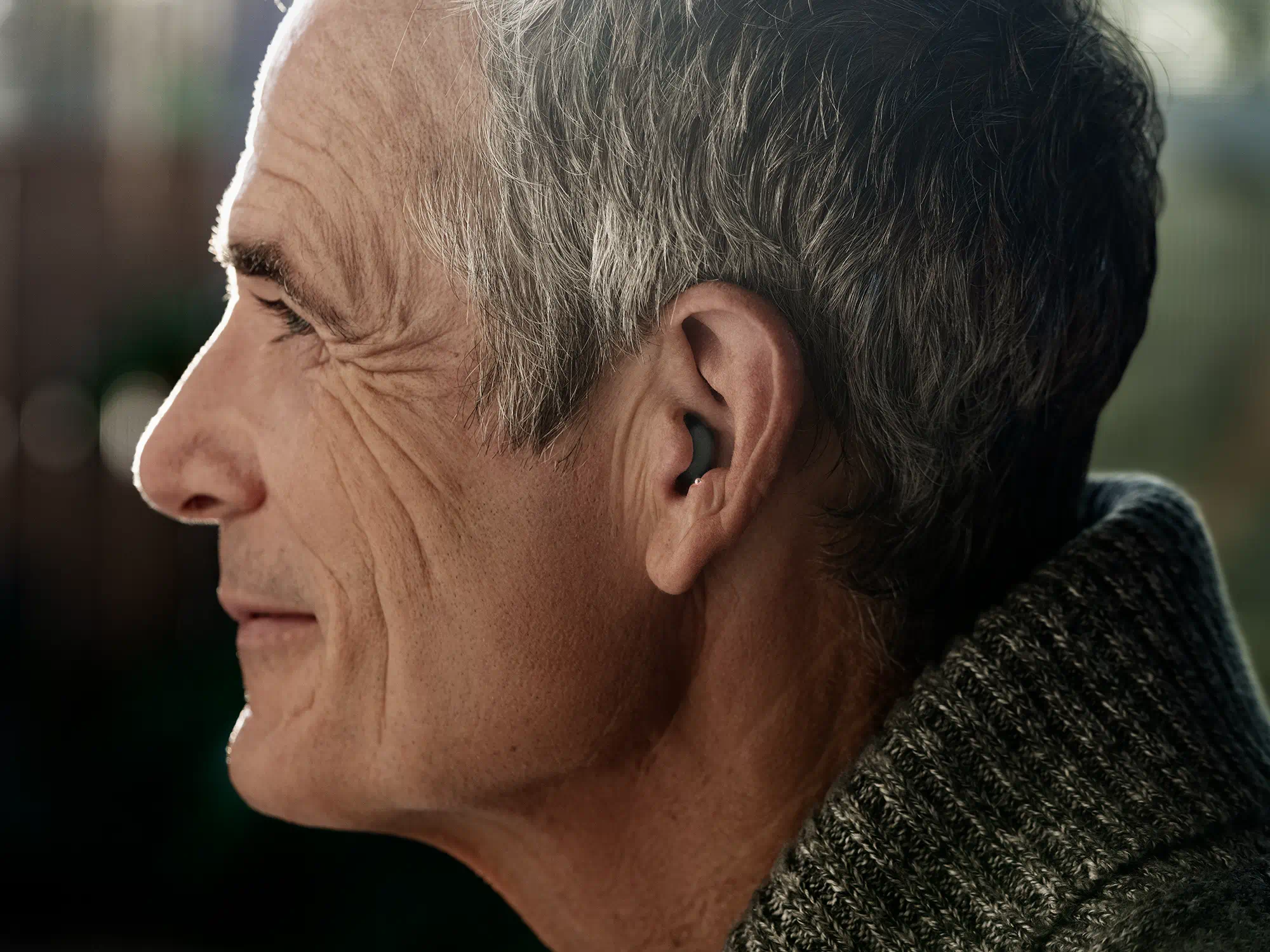
Custom-made ITE hearing aids are also a well-known type of hearing aid, often chosen for clients with poor dexterity, explains Durrheim. “Due to the custom shape, an ITE hearing aid fits into your ear like a piece in a jigsaw puzzle. Making them comfortable and easy to use.”
There are several types of ITE hearing aids:

ITC
In-the-canal (ITC) balance size and discretion, while mimicking the natural acoustics of the human ear.CIC
Completely-in-canal (CIC) is even smaller than the above, while still maintaining some additional tech features.IIC
Invisible-in-canal (IIC) is the smallest and most discreet, however, it has the least features and needs to be removed using a small pull-out string.Latest ITE
Some newer ITE models are designed to look like earbuds, giving you an ultra-modern, tech-forward look.

Consider an ITE if you:
- Have mild to moderate hearing loss2
- Value discretion above all else
- Want the best hearing aid style for wearing glasses
Receiver-in-Canal (RIC) Style for the Best of Both Worlds
Sometimes in life, you can have your cake and eat it, too. A RIC hearing aid is a great example of this, combining the discretion of an ITE with the technology, longevity, and comfort of a BTE.
“RIC or BTE hearing aids, which are fitted well with the right size receiver and/or tube, and proper dome/sleeve/earmolds, will stay in the ear well,” says Moerman, adding “so there is no need to worry about losing your hearing aid”. It’s a great choice if you’re on the move a lot or want added peace of mind.

Advantages of RIC Hearing Aids:
Discreet
Much more discreet than a BTE while not sacrificing technological features such as Bluetooth streaming3Style
The most popular style is therefore gaining access to the latest tech
Directional Microphones
Features directional microphones, allowing users a more focused approach to directional sound2

Consider a RIC if you:
- Want the benefits of a BTE without any of the aesthetic drawbacks of wearing one
- Want the discretion of an ITE without losing any of the technological features of it
- Maintain an active lifestyle and want the benefits of long-lasting battery performance
Hearing Aids and Spectacles:
If you wear glasses, you’ve probably wondered how hearing aids will fit alongside your frames, especially behind the ears. The good news is, many modern hearing aid designs take this into account.

For example, within the popular Receiver-in-Canal (RIC) style, there are slim RIC options that offer a thinner, more discreet profile. These are often more comfortable for glasses wearers as they reduce the feeling of “stacking” devices behind your ears.
Some hearing aid designs have gone a step further, creating devices specifically tailored for those who wear spectacles. These hearing aids are not only sleeker in shape, but some also reposition the microphones for better performance when worn with glasses, helping reduce feedback and improve sound clarity.
Alternatively, if the idea of wearing both glasses and hearing aids at once is not appealing, you might consider In-the-Ear (ITE) hearing aids instead. These sit entirely within the ear and free up space behind the ears, offering a more streamlined option for glasses wearers.
1 Soundly: Exercise and Hearing Aids: A Guide for Runners, Cyclists, and Athletes: (25 April 2025): https://www.soundly.com/blog/exercise-hearing-aids
2 Mayo Clinic: Hearing aids: How to choose the right one (4 April 2024): https://www.mayoclinic.org/diseases-conditions/hearing-loss/in-depth/hearing-aids/art-20044116
3 Soundly: Hearing Aid Styles Explained With Photos | RIC, BTE, IIC, ITE, CIC: (23 May 2025): https://www.soundly.com/blog/hearing-aid-styles
4 Audiology Research: Towards Auditory Profile-Based Hearing-Aid Fitting: Fitting Rationale and Pilot Evaluation (16 January 2021) https://pmc.ncbi.nlm.nih.gov/articles/PMC7924363/
4 Seminars in Hearing: Applying the Hearing Aid Fitting Standard to Selection for Adults (May 2022): https://pubmed.ncbi.nlm.nih.gov/35903077/
4 Plural Publishing Inc: Essentials of Modern Hearing Aids: Selection, Fitting, and Verification (2019)