【助聽器消委會】聽力學家拆解 3大中伏陷阱!附消委會 4 步選購指南與高性價比推薦

要打破這個困局,關鍵在於專業驗配。作為具備跨國醫療級背景與專業聽力學家駐場的品牌,Widex 一直致力透過透明的驗配流程與革新技術,協助香港患者避開消費陷阱,重拾自然清晰的聽力體驗。
警惕平價擴音器的「聽力陷阱」
許多長者或照顧者在初步接觸聽力產品時,常會因為價格考量而選擇坊間數百元的平價擴音器。但在購買這些產品時要留意消費陷阱。
一般長者出現聽力狀況,在不同音頻上會有不同程度的下降,而非整體聽力一致性下降。平價擴音器缺乏精密的頻率和分貝調校功能,只會將環境中所有聲音無差別地放大。消費者委員會指出,隨意購買此類儀器非但不能改善聽力,聽得既不舒適又不清晰,而且長期接收過高分貝的噪音,嚴重者更會破壞剩餘的聽力[1]。
專業驗配的第一步,是先進行詳細的純音聽力測試,由聽力學家準確找出患者受損的特定頻率和分貝,再調校助聽器設定,針對性地進行聲音補償,這絕非一部簡單的擴音器所能做到。
聽力專家推薦的 3 大選購準則
為了避免跌入擴音器陷阱或買到不合適的產品,以下是聽力學家建議的 3 大核心選購準則:
準則一:事前評估與試戴
購買聽力產品前應該經過專業評估與試戴。坊間不少聽力中心只做到純銷售但缺乏專業聽力學家駐場,難以提供準確的判斷。Widex 提供專業的聽力測試,並有助聽器7天試戴服務[YF1],讓患者能在真實生活場景中感受音質,大幅降低初次佩戴的排斥感。
準則二:考慮抗噪與自然音質
長者購買助聽器後拒絕佩戴,多半是因為覺得「聲音太假」或「有回音」。傳統助聽器在處理聲音時會產生延遲,當助聽器發出的聲音與直接進入耳道的自然聲音混合時,便會形成失真的機械聲。
Widex 研發的 PureSound™ 平台結合 ZeroDelay™ 處理技術,成功將聲音處理時間縮短至 0.5 毫秒以下[2]。自然音質能有效解決長者最怕的「嘈雜感」。
準則三:看清保養與維修條款
消委會表示曾接獲投訴,有消費者發現保養範圍不涵蓋配件更換,在維修或重造耳機時被要求收取高昂的「行政費」及零件費[3]。
由於助聽器需要定期的保養以及定期的調校和跟進,購買時應該留意有沒有相應的售後服務。Widex 憑藉在香港超過 40 年的服務經驗,提供高度透明的費用與完善的售後支援,確保患者在購買後能持續獲得專業的售後服務。[YF2]
Widex 唯聽助聽器介紹
針對不同年齡層與聽力問題,Widex 提供多元化的聽力服務。患者可透過助聽器試戴服務,找出最切合自身需求的型號:
|
方案類型 |
核心技術 |
|
Allure 系列 |
全新晶片實現近乎零延遲聲音處理及傳輸。降噪的同時突顯對話語音。無線藍牙連接更穩定。 |
|
SmartRIC 系列 |
“L”型設計,更能聚焦對話及聲音。音質提升更具立體感。特別麥克風蓋設計,大大減低風噪聲。 |
|
MOMENT 系列 |
內建 AI 智能個人化設定,支援藍牙連接與充電續航,配備ZeroDelay™ 快速聲音處理技術。 |
專業驗配與行動指南:全方位聽力支援
聽力復康是一段需要專業陪伴的旅程。Widex 在全港設有 5 間設備完善的聽力中心,由經驗豐富的聽力團隊提供售後服務與支援。對於擔心長輩排斥佩戴的照顧者,我們建議及早預約 Widex 的免費聽力檢查與驗配諮詢。透過客觀的數據分析與真實的試戴體驗,讓聽力學家為你量身制定改善方案。
選購助聽器常見問題 FAQ
Q1:消委會建議的「購買助聽器四部曲」是什麼?
消委會建議的流程為:1. 專業聽力評估;2. 揀選助聽器款式;3. 試戴與適應;4. 了解售後維修及保養條款[4]。Widex 的驗配服務正是建基於這個流程,確保從評估到售後,都能給你透明安心的體驗。
Q2:助聽器市面價錢由幾百到幾萬均有,消費者如何避免跌入消委會提及的消費陷阱?
應避開沒有專業聽力團隊驗配、沒有售後服務的平價擴音器。購買時務必書面確認保養期長短、是否包含零件維修費及隱藏行政費[5]。
Q3:擴音器與專業助聽器在醫學上有何分別?
擴音器只會單純將所有聲音放大,容易損害殘餘聽力;專業助聽器則會根據不同患者的聽力狀況,針對性地調校受損頻率的聲音,同時降低背景噪音[6]。
Q4:市面價錢由幾百到幾萬,消費者如何辨別價值?
助聽器的價值在於其晶片級別及聲音處理技術(如加快聲音處理的 ZeroDelay™ 技術)、降噪能力,以及聽力學家提供的售後調校服務。
Q5:長者戴了覺得「太嘈」是技術問題還是適應問題?
兩者皆有。技術上,舊式助聽器在控制回音方面較遜色,而且音質一般較差;適應上,大腦需要時間重新習慣被放大後的環境聲。選擇具備自然音質技術的產品並配合漸進式佩戴,可有效解決此痛點。
Q6:Widex 的驗配流程是否包含免費聽力測試?
是的,唯聽香港聽力中心提供免費聽力測試,協助患者準確了解自身的聽力狀況。
Q7:長者初次佩戴需要多久的適應期?
一般需要數星期至數個月不等。[YF3]建議初期在安靜的居家環境中短時間佩戴,再逐漸過渡到嘈雜的戶外環境,期間需配合聽力學家的微調。
Q8:Widex 提供助聽器 Trade-in 優惠嗎?
隨助聽科技提升,或用家聽力狀況、生活習慣等出現變化,都可能需要更換新助聽器。用家可憑舊助聽器,以優惠價驗配新助聽器。讓用家更輕鬆體驗新科技,有更好的聆聽體驗。
Q9:耳鳴人士可以透過助聽器改善嗎?
可以。唯聽香港提供耳鳴舒緩方案。有別於其他使用白噪音的耳鳴聲遮蔽器,WIDEX助聽器配備 Zen 禪音技術,透過隨機播放的特定音調,能夠充分地運用音樂可令人放鬆的特性,讓用家不僅能轉移注意力,更能舒緩耳鳴帶來的焦慮感[7]。
Q10:如何幫不願承認弱聽的長輩跨出第一步?
建議先預約免費聽力檢查,利用客觀的聽力圖向長輩解釋實際的聽力狀況,並善用助聽器試戴服務,讓長者在日常環境中感受聲音補償的實際輔助效果,從而逐步降低對佩戴儀器的抗拒感。
參考資料
- 消費者委員會 (2021) 醫療儀器投訴各異 促釐清規管配合市場發展. https://www.consumer.org.hk/tc/press-release/p-567-medical-devices-complaints
- 消費者委員會 (2021) 《選擇》月刊第 463 期. https://www.consumer.org.hk/tc/article/463-4139
- 消費者委員會 (2021) 購買助聽器四部曲. https://www.consumer.org.hk/tc/shopping-guide/tips/2021-tips-hearing-aids
- Widex Hong Kong (n.d.) 數碼助聽器. https://www.widexhongkong.com.hk/hearing-aids/digital-hearing-aids/
[1]消費者委員會 (2021) 《選擇》月刊第 463 期. https://www.consumer.org.hk/tc/article/463-4139
[2] Widex Hong Kong (n.d.) 數碼助聽器. https://www.widexhongkong.com.hk/hearing-aids/digital-hearing-aids/
[3]消費者委員會 (2021) 醫療儀器投訴各異 促釐清規管配合市場發展. https://www.consumer.org.hk/tc/press-release/p-567-medical-devices-complaints
[4]消費者委員會 (2021) 購買助聽器四部曲. https://www.consumer.org.hk/tc/shopping-guide/tips/2021-tips-hearing-aids
[5]消費者委員會 (2021) 醫療儀器投訴各異 促釐清規管配合市場發展. https://www.consumer.org.hk/tc/press-release/p-567-medical-devices-complaints
[6]消費者委員會 (2021) 《選擇》月刊第 463 期. https://www.consumer.org.hk/tc/article/463-4139
[7] Widex Hong Kong (n.d.) 數碼助聽器. https://www.widexhongkong.com.hk/hearing-aids/digital-hearing-aids/
Choosing Your Hearing Health Solution
Which Are the Right Choice of Hearing Aids for You?
Modern hearing aids are designed to help you hear better and support the way you live, work and connect. When selecting a hearing aid, consider what works for your unique lifestyle and priorities.
“Although most hearing aids cater to a wide range of general hearing needs, the right choice still depends on your specific needs,” explains hearing care professional A. Moerman. “You should consider lifestyle factors such as occupation, leisure activities and sound environments to help you find a solution that truly suits you.”
Whether you’re at work, at the gym, or out with friends, modern options are designed to fit right in.
Understanding Hearing Aid Form Factors
Physical vs. Software Design
Physical design determines how and where you wear the device. This includes factors like size, placement (behind-the-ear or in-the-ear), and how it interacts with other items you wear, such as glasses or hats. It affects comfort during different activities, whether you're working out, socializing, or relaxing at home.
Software design, on the other hand, is all about how the hearing aid processes sound. Hearing aids come with different technology levels, tailored to handle a range of environments, from quiet settings to noisy social gatherings.
The good news is that most software features are now available across different physical styles, giving users more flexibility without having to compromise on performance.
 The rise of rechargeable hearing aids has made life easier, especially for active people. As technology advances, today’s hearing aids do more than amplify sound, they’re smart lifestyle devices keeping you connected and in control.
Why Technology Level Matters Just as Much as Style
Not all hearing aids are created equal, and we’re not just talking about their shape or how they sit on your ear. The technology inside your hearing aids plays a huge role in how well they perform in your everyday life.
Basic models may be ideal if you mostly spend time in quiet, one-on-one settings. But if your days include business meetings, busy cafes, or outdoor sports, you’ll likely benefit more from advanced to premium hearing aids that can automatically adapt to these more complex environments.
Choosing the right level of technology helps you hear speech clearly, reduce background distractions, and enjoy a more natural and comfortable listening experience in any situation. That’s why it’s a good idea to talk to your audiologist about what kind of support your hearing needs day-to-day, not just how the device looks or feels in your ear.

Common Hearing Aid Choices
Behind-the-Ear (BTE)
Behind-the-ear (BTE) hearing aids offer a secure, comfortable fit, making them a great choice for active individuals and sports enthusiasts. Their design keeps sensitive parts away from sweat and moisture, enhancing durability.
BTEs are also easier to handle, making them a smart choice for people with dexterity or vision impairments. They are commonly used for mild to profound hearing loss, as they support more powerful amplification and larger batteries.


Rechargeable options

Bluetooth connectivity

Easier maintenance

Better feedback control through custom earmolds
If you often exercise and sweat, steer away from hearing aids, which are more susceptible to moisture issues. Instead, opt for a BTE style where any damage that impacts the tubing or wire segment is more affordable to fix.
In-the-Ear (ITE) for a More Discreet Hearing Option
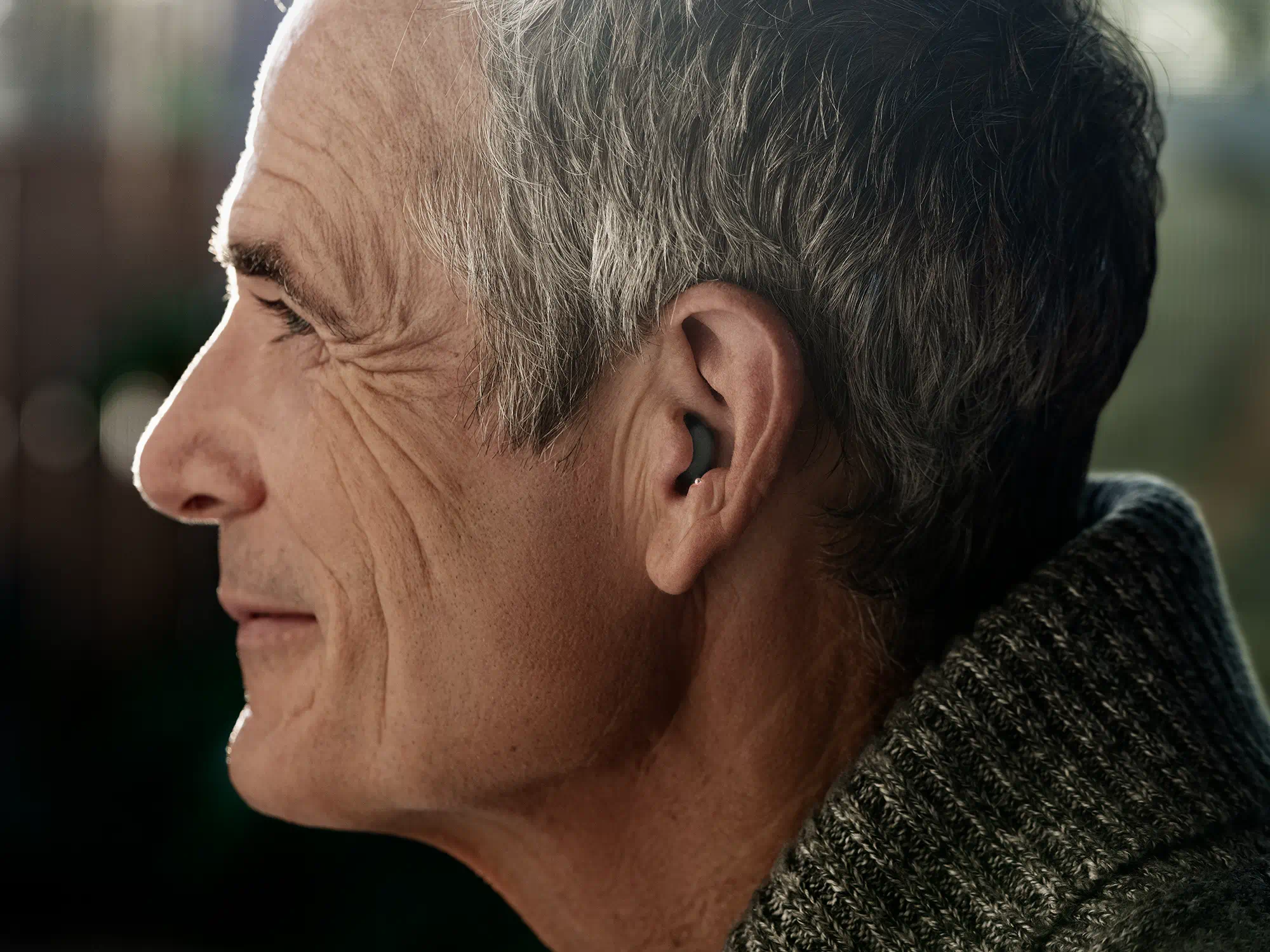
Custom-made ITE hearing aids are also a well-known type of hearing aid, often chosen for clients with poor dexterity, explains Durrheim. “Due to the custom shape, an ITE hearing aid fits into your ear like a piece in a jigsaw puzzle. Making them comfortable and easy to use.”
There are several types of ITE hearing aids:

ITC
In-the-canal (ITC) balance size and discretion, while mimicking the natural acoustics of the human ear.CIC
Completely-in-canal (CIC) is even smaller than the above, while still maintaining some additional tech features.IIC
Invisible-in-canal (IIC) is the smallest and most discreet, however, it has the least features and needs to be removed using a small pull-out string.Latest ITE
Some newer ITE models are designed to look like earbuds, giving you an ultra-modern, tech-forward look.

Consider an ITE if you:
- Have mild to moderate hearing loss2
- Value discretion above all else
- Want the best hearing aid style for wearing glasses
Receiver-in-Canal (RIC) Style for the Best of Both Worlds
Sometimes in life, you can have your cake and eat it, too. A RIC hearing aid is a great example of this, combining the discretion of an ITE with the technology, longevity, and comfort of a BTE.
“RIC or BTE hearing aids, which are fitted well with the right size receiver and/or tube, and proper dome/sleeve/earmolds, will stay in the ear well,” says Moerman, adding “so there is no need to worry about losing your hearing aid”. It’s a great choice if you’re on the move a lot or want added peace of mind.

Advantages of RIC Hearing Aids:
Discreet
Much more discreet than a BTE while not sacrificing technological features such as Bluetooth streaming3Style
The most popular style is therefore gaining access to the latest tech
Directional Microphones
Features directional microphones, allowing users a more focused approach to directional sound2

Consider a RIC if you:
- Want the benefits of a BTE without any of the aesthetic drawbacks of wearing one
- Want the discretion of an ITE without losing any of the technological features of it
- Maintain an active lifestyle and want the benefits of long-lasting battery performance
Hearing Aids and Spectacles:
If you wear glasses, you’ve probably wondered how hearing aids will fit alongside your frames, especially behind the ears. The good news is, many modern hearing aid designs take this into account.

For example, within the popular Receiver-in-Canal (RIC) style, there are slim RIC options that offer a thinner, more discreet profile. These are often more comfortable for glasses wearers as they reduce the feeling of “stacking” devices behind your ears.
Some hearing aid designs have gone a step further, creating devices specifically tailored for those who wear spectacles. These hearing aids are not only sleeker in shape, but some also reposition the microphones for better performance when worn with glasses, helping reduce feedback and improve sound clarity.
Alternatively, if the idea of wearing both glasses and hearing aids at once is not appealing, you might consider In-the-Ear (ITE) hearing aids instead. These sit entirely within the ear and free up space behind the ears, offering a more streamlined option for glasses wearers.
1 Soundly: Exercise and Hearing Aids: A Guide for Runners, Cyclists, and Athletes: (25 April 2025): https://www.soundly.com/blog/exercise-hearing-aids
2 Mayo Clinic: Hearing aids: How to choose the right one (4 April 2024): https://www.mayoclinic.org/diseases-conditions/hearing-loss/in-depth/hearing-aids/art-20044116
3 Soundly: Hearing Aid Styles Explained With Photos | RIC, BTE, IIC, ITE, CIC: (23 May 2025): https://www.soundly.com/blog/hearing-aid-styles
4 Audiology Research: Towards Auditory Profile-Based Hearing-Aid Fitting: Fitting Rationale and Pilot Evaluation (16 January 2021) https://pmc.ncbi.nlm.nih.gov/articles/PMC7924363/
4 Seminars in Hearing: Applying the Hearing Aid Fitting Standard to Selection for Adults (May 2022): https://pubmed.ncbi.nlm.nih.gov/35903077/
4 Plural Publishing Inc: Essentials of Modern Hearing Aids: Selection, Fitting, and Verification (2019)